
Analysis and Modeling of Software
In the second part of our project called Canvas 2.0 we did a few interviews with teachers and students to get an idea of how to do a program which handles the organizational things in a university.

Things we learned about our Project
There are some amazing LMS all around the globe and they are quite complete. By interviewing a couple of teachers, we realized LMS may have some flaws, or they cannot be customized to fit all the teacher’s needs. Also, Most of LMS are constructed using an antiquated view of education, only digitizing the old educative methods and mixing those up with some technological features. Our users need a better system, one that also consider the needs of the students (they are indeed the most of users). The students want an experience from education, not a recipe; to achieve this, we will base our system in two concepts: Keep on listening to the student and teacher’s needs, and last but not least, (as some students suggested) this will be an open source project.

We had some great ideas, and we were thinking we almost designed the holy grail of LMS. But there were some features that could be compared to a swimming pool into the ocean, and we realized it thanks to the interviews; so, in order to develop a successful project, users will lead to where the platform is going. In the other part, making this an open source platform will contribute to a better enrollment with the community and everyone who has a great idea will be able to implement it on the platform. We are looking to make an excellent educative platform, made by people, and for people, not numbers.
By interviewing our main users (Students and teachers), we realized of two problems that need to be solved: first, to deliver a customizable platform that can fit any new educative model, and second: there is a problem that most of the teachers are not conscious about. There is a “one to many” relation between the teacher and the students, and that also implies that there is a many to one relationship flowing in the other way; thus, every teacher is free to choose what platform he is going to use for his course, but the students may have to use different platforms for each lecture. We need to make a platform that can retrieve data from the most used LMS, so, you can have as a student, everything in one place.
Progress in interviewing
The first Interview was not very easy… nobody of us did a interview before. We spend a lot of time for thinking about who to interview and what questions to ask. And to be honest, we have been a littlebit nervous befor we did the first. At least me.
But that feelinhg went away very quickly when we started with the questions.
Our Process of interviewing was very simple at the beginning:
- We prepared some questions to ask
- Did the interview
- Tried to use the answers we got for the project
One of the biggest Problems of the first interview was that we didn’t really know what to ask. And also the interview itself was not very organized. We asked about to much different topics to one persons and because auf that the answers we got were not very helpful. Not because of the person we interviewd but because our questions were not specific enough.
We did the first one as a team. So everybody asked one question and then the next one and so on. It felt more as a iterrogation than a normal conversation or interview. Nonetheless we were able to collect some stuff with which we were able to work with. We talked about that later on and everybody had the same opinion: we have to change our strategy.
The second interview was much better… we didn’t do it as a team, so we were able to be more efficient and do more interviews in less time. Also the interview itself was mre „relaxed“ because it ended up in a normal conversation about the organizational things in a university.

Another thing we improved were the questions we asked about our project. In the first interview we had strugles with what to ask and how to ask. But the more we did the better we knew about what to speak. Our questions were more specific. At the end it was because new questions showed up when we continued with the project after an interview.
We also improved our organization during the interviews. We tried to asked in one interview more about one topic. We did a brainstorm about a few topics in our whatsapp group, which questions to ask and what each of us wants to know about the different topics. Throughout that we were able to focus on one topic per interview.
For example: We asked one student only about his opinion how TEC handles the enrollment and registration of courses and how he thinks that could be improved. We got much better answeres to work with and were able to finish some stuff more quick.
At the end our Process of interviewing looked like this:
- Choosing a topic to do a interview about
- Choosing the „right“ person to speak to
- Brainstorming in whatsapp about which questions to ask
- Deciding which questions are the most important ones
- Short talk about who should do the interview
- Putting the questions in a chronological order
- greeting the interviewed person
- introduction to the topic
- asking the questions in their chronological order
- doinig a summary of all the answers
- deciding which answers are useful and which not
- using the answers for improving the project
Now we think we have a nearly perfect Process of doing a interview. For a new interview we decided to stick to our current strategy because it worked very well at the end.
Change in use-Cases
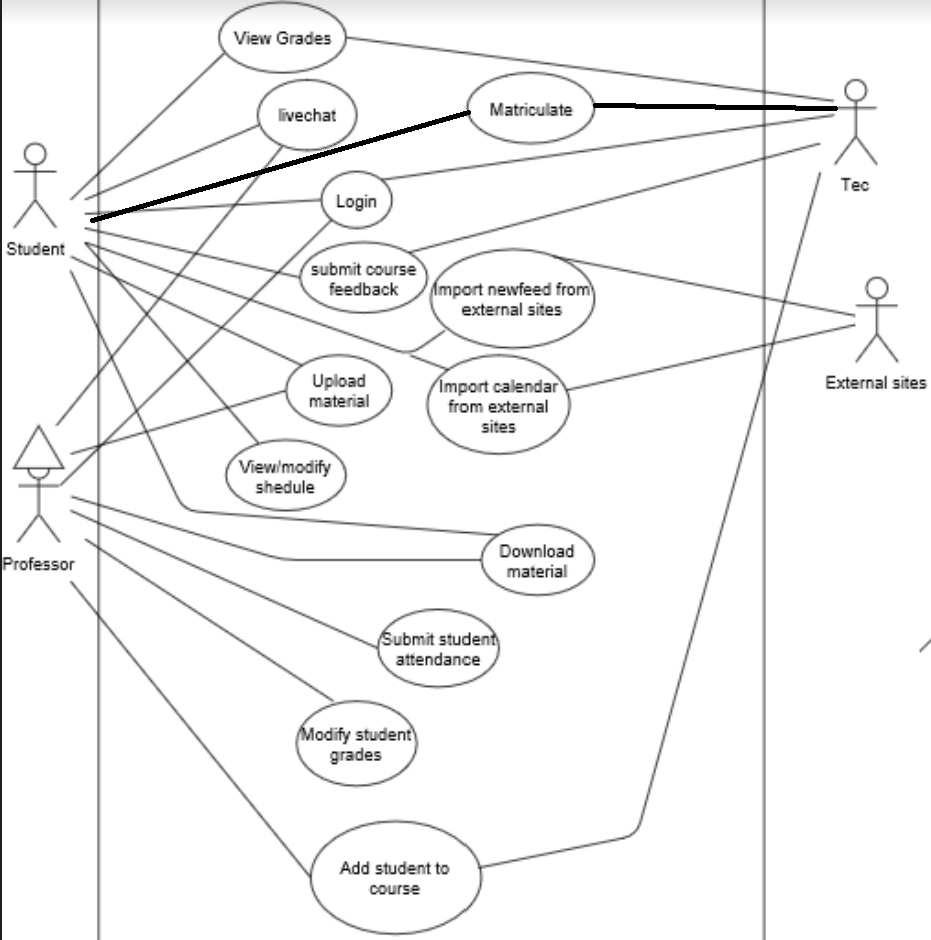
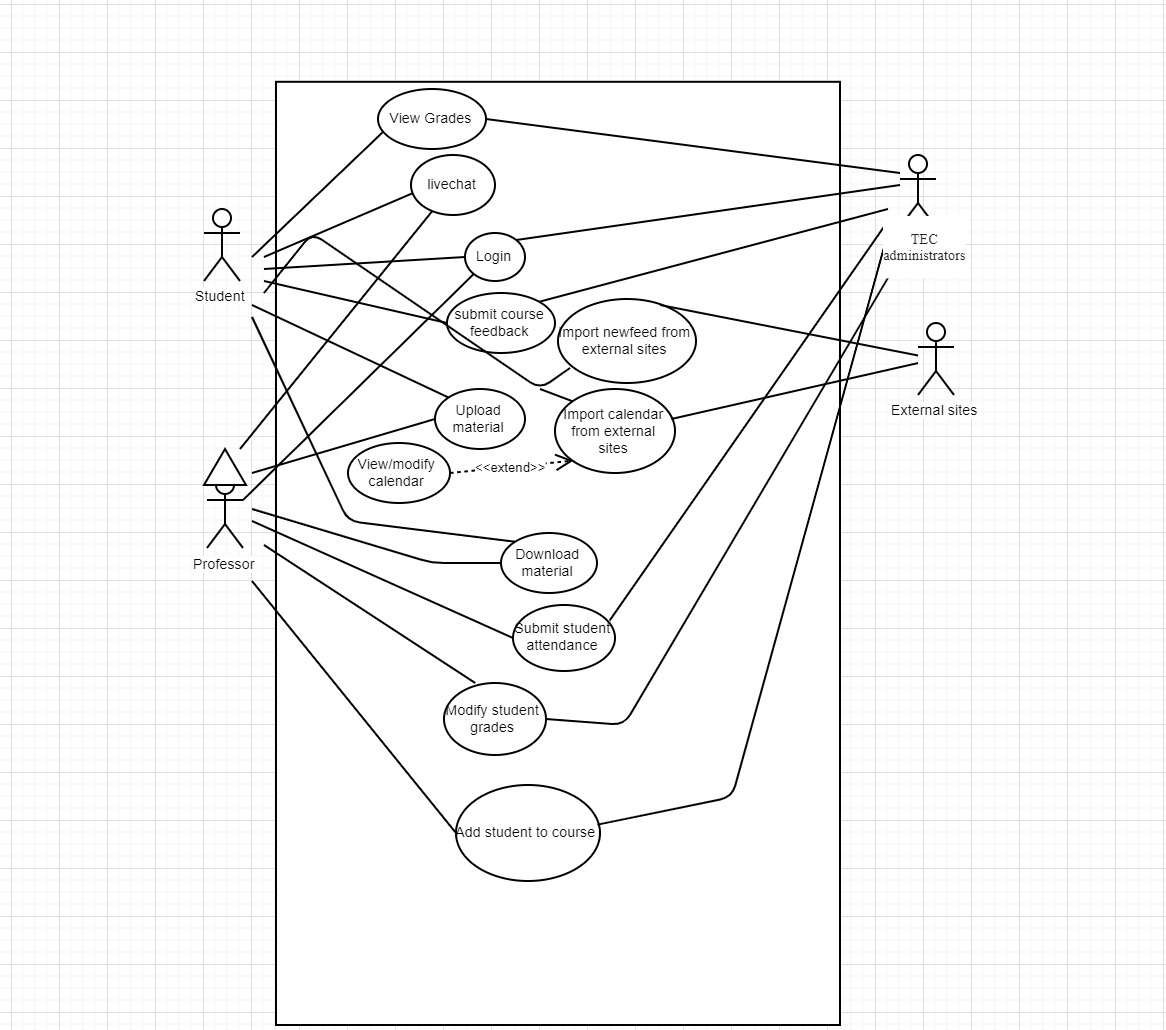
During our interviews we recognized that our use-cases were quite good. Nontheless we had to change some things because it didn’t fit our requirements or it was not very logical.
For example we swiched view/modify schedule to extends because normally its not possible to change the schedule during the semester. So there wouldn’t be much sense in modifying after it is given.
Another change was the name of Tec actor. We decided to use Tec adminstrators instead because its more specific.
class diagrams and database ER diagrams
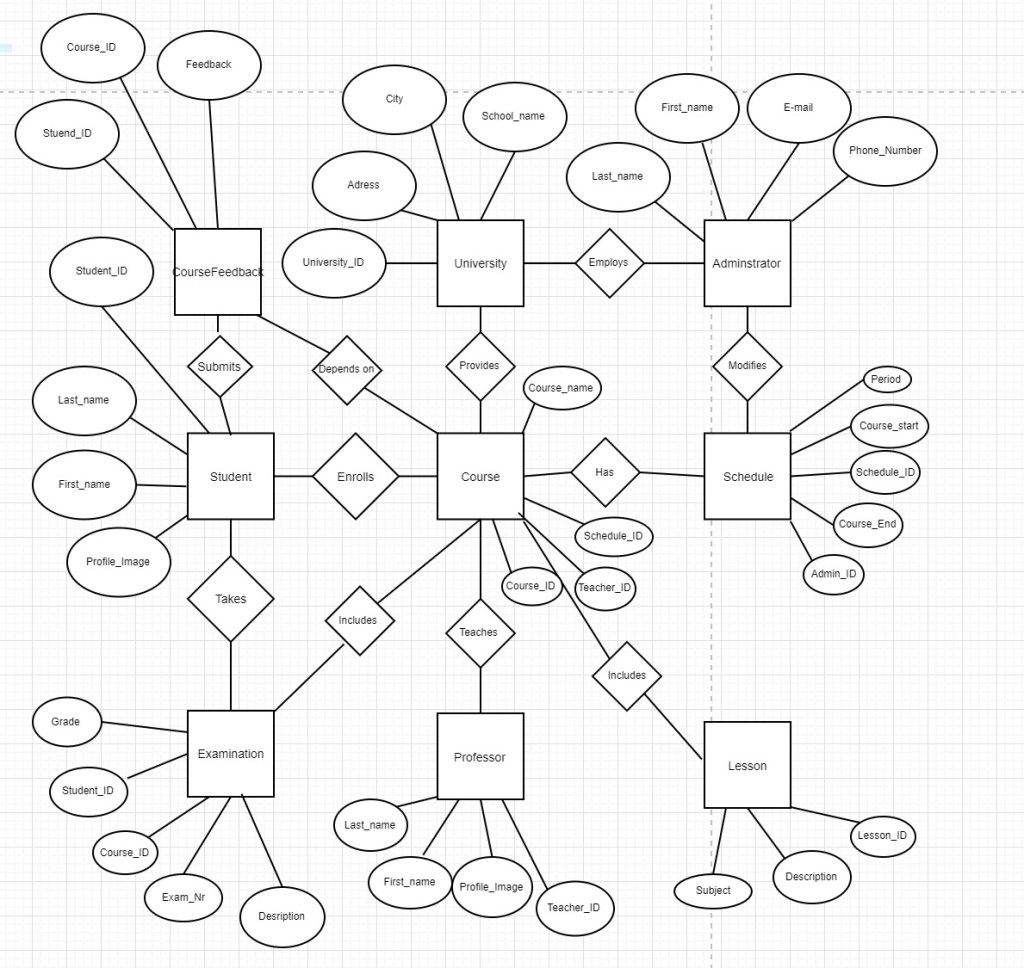
In the next picture you can see a very basic ER Diaghram that shows the most important data we will store in our project and how they are related respectively how they are connected to each other.


Ein Kommentar zu “Project Delivery 2 #SPK”